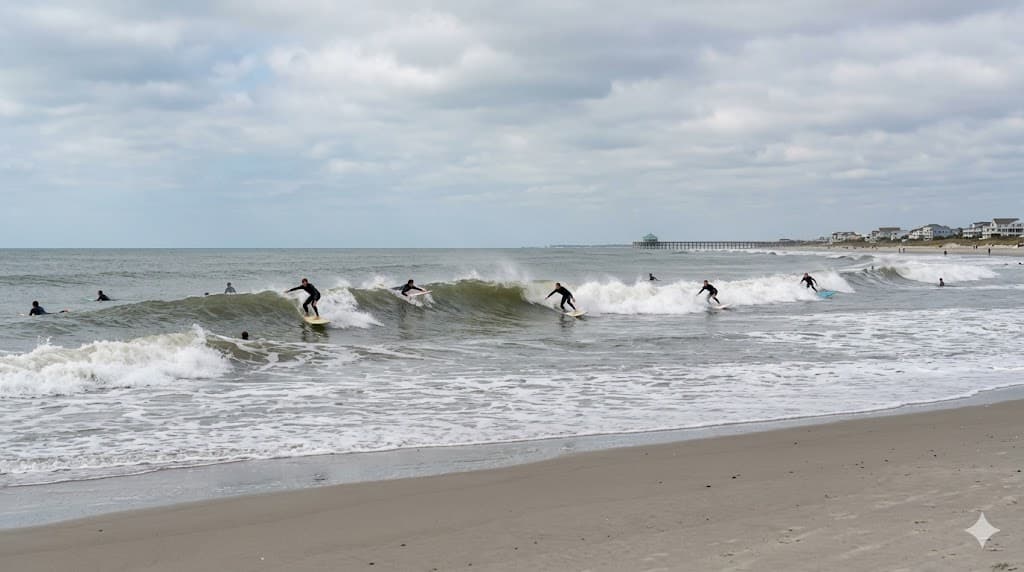
The Washout is the best surf break in South Carolina. That's the consensus of everyone who has spent meaningful time in the water along this stretch of the East Coast, and it's not a close competition. The combination of how it was created, where it sits on the island, and the way it handles swell makes it genuinely special in a region where good waves are not guaranteed.
Here is everything you need to know about the Washout — its history, how it works, what to expect, and how to get the most out of it.
How the Washout Was Created
The Washout did not exist before Hurricane Hugo made landfall near Charleston on September 21, 1989. Hugo was a Category 4 hurricane when it came ashore and its storm surge — estimated at 20 feet in some areas — was catastrophic for Folly Beach.
The surge carved a channel through the dunes at the western end of the island, washing out a section of the beach and permanently altering the terrain. When the water receded and the island began its recovery, the channels and depressions left by the storm surge created new sandbar configurations offshore. Those sandbars produced a break that hadn't existed before.
Local surfers discovered quickly that the storm had created something good. The sandbars that formed in the weeks and months after Hugo produced a wave quality that the pre-Hugo beach hadn't offered. Within a season, the Washout had become the premier surf spot on the island.
The name stuck — the Washout is what the storm literally did to that section of the beach, and it became the name for the break that formed there.
Where It Is
The Washout is located on the western end of Folly Island, roughly at the intersection of West Erie Avenue and West Hudson Avenue. From Center Street, drive west past the residential neighborhoods, continuing until you start seeing cars parked along the street with surfboards sticking out of windows. That's the Washout neighborhood.
There's no designated parking lot. Street parking on West Erie, West Hudson, and the surrounding streets serves the break. On good surf days, especially weekends, parking fills up early. The walk from wherever you park to the water is typically short — the whole area is compact.
What the Break Produces
The Washout is a beach break — waves break over sandbars rather than reef or rock. This gives it a shifting, dynamic character that changes with seasons, storms, and tide cycles as sandbars move and reform.
On a good day: Northeast or east groundswell with light northwest (offshore) winds and a mid to low tide produces the Washout at its best. Waves break both left and right depending on the sandbar configuration. At its peak, the Washout produces punchy, hollow beach break that rewards aggressive surfing — late drops, hard turns, occasional barrel opportunities on the better sandbars.
Size range: The Washout handles a wide range of swell sizes. On small days — one to two feet — it's forgiving and accessible for developing surfers. On larger days — four to six feet of solid groundswell — it becomes a serious wave that demands experience. The East Coast doesn't produce large surf consistently, but when a strong northeast swell arrives in fall or after a tropical system, the Washout can be genuinely impressive.
Compared to the pier: The Folly Beach Pier area produces a slower, more forgiving wave suited to longboarding. The Washout is generally more powerful and faster — better for shortboards and experienced surfers, though accessible to longboarders on smaller days.
The Sandbars
Sandbar position at the Washout changes throughout the year. Summer sandbars are often different from winter sandbars. A significant storm can reshape them overnight.
The best sandbars at the Washout produce a peak — a defined takeoff spot where the wave breaks consistently in both directions. When the sandbars are good, the Washout has multiple defined peaks spread across the break, each with its own takeoff zone and wave shape.
When the sandbars are poor — typically after periods of small, directionless swell that doesn't have the energy to build and maintain them — the Washout becomes a closeout break where waves break simultaneously across a wide section rather than peeling in one direction. Checking conditions before paddling out on a marginal day is worth the time.
The Crowd
The Washout is the most popular surf spot in South Carolina. On a good surf day — particularly in fall when northeast swells arrive consistently — the lineup can be crowded. The local surfing community is skilled and knows the break well.
Standard surf etiquette applies with particular importance here because the crowd can be dense. Right of way belongs to the surfer closest to the peak. Dropping in on someone already riding a wave is not tolerated. Paddling around the break rather than through the lineup when possible reduces conflict.
New surfers and visitors who approach the Washout with respect and patience will find the local community welcoming. Those who paddle out aggressively and ignore the etiquette of a known break will have a different experience.
Best Seasons
Fall is the Washout's best season. September through November brings the combination of warm water still lingering from summer, hurricane swell from the Atlantic storm track, and northeast groundswell from early season storms. The crowds are lighter than summer and the waves are often the best of the year.
Winter brings cold water but consistent swell and minimal crowds. A 4/3 wetsuit handles December through February comfortably. The dedicated local community surfs year-round and winter mornings at the Washout — cold, uncrowded, with solid swell — are genuinely memorable.
Summer is the most popular season for beach visits but the least consistent for surf. Small wind swell is typical. Hurricane season from June through November can produce excellent surf from offshore storms, but timing those events is unpredictable.
Spring is transitional — improving water temperatures, occasional solid swells, and pre-season crowd levels that are more manageable than summer.
The Wahine Classic Connection
The Washout's reputation for producing the best waves in South Carolina was part of what made Folly Beach the natural home for the Wahine Classic — the women's surf competition that ran from 2006 to 2017. The event drew competitors from across the Southeast specifically because the Folly Beach surf, anchored by the Washout, offered contest conditions unavailable elsewhere in the state.
For more on surfing Folly Beach beyond the Washout, see our complete surfing guide and the Folly Beach rules guide for regulations that apply before you paddle out.