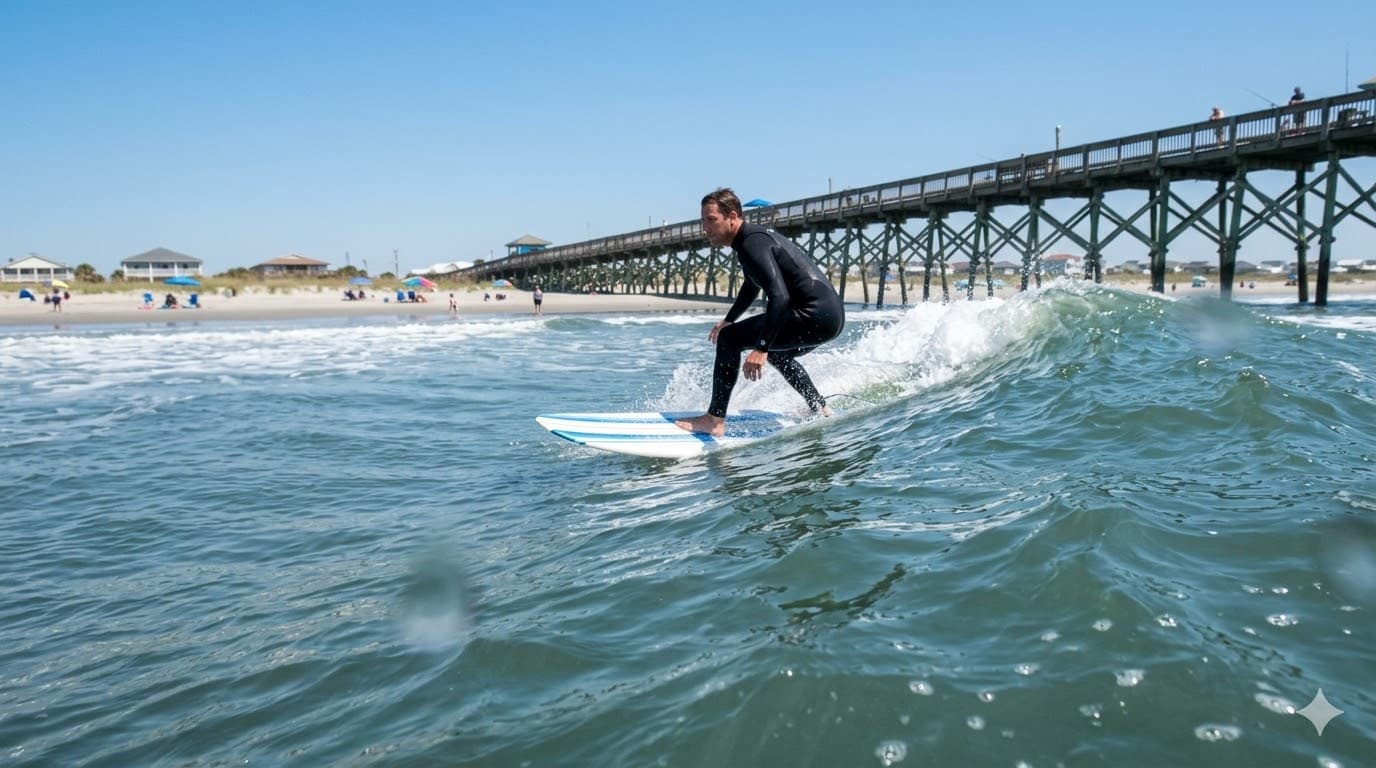
Folly Beach is the best place to surf in South Carolina. That's not a tourism pitch — it's the consensus of everyone who has spent time in the water along this stretch of the East Coast. The combination of geography, swell exposure, and local surf culture makes Folly Beach genuinely special in a region where good waves are not guaranteed.
Here is everything you need to know before you paddle out.
Why Folly Beach Has the Best Surf in South Carolina
South Carolina's coastline runs roughly northeast to southwest, which limits swell exposure for most beaches. Folly Beach sits at the edge of Folly Island, which juts into the Atlantic in a way that catches more swell than neighboring beaches. The result is more consistent surf, more days with rideable waves, and a break quality that draws surfers from across the Southeast.
The Charleston Harbor jetties, built in the late 1800s to maintain the shipping channel, altered the sediment flow along this section of coast. That alteration created and continues to shape the sandbars that make Folly Beach's breaks work. The same geological reality that causes chronic erosion on the island is what gives it good surf.
The Main Breaks
The Washout is the signature break on Folly Beach and the reason most surfers come here. Located on the western end of the island near the intersection of West Erie and West Hudson Avenues, the Washout was created by Hurricane Hugo in 1989 when the storm carved a channel through the dunes. That channel permanently altered the sandbars, creating a consistent beach break that works on a range of swells and conditions.
The Washout handles northeast and east swells well. It produces both lefts and rights depending on sandbar position, which shifts seasonally. On a solid northeast swell with light offshore winds — northwest is ideal — the Washout can produce clean, punchy waves that hold up well for shortboarding. On smaller days it's forgiving enough for longboards and beginners.
Parking at the Washout is street parking on West Erie and surrounding streets. It fills up early on good surf days. Arrive before the crowd or accept a longer walk.
The Folly Beach Pier area produces a different kind of wave. The Edwin S. Taylor Fishing Pier creates a sand-trapping effect that builds consistent sandbars on both sides. The pier-adjacent break tends to be slower and more forgiving than the Washout — better for longboarding and for surfers still developing their skills. Surfing is prohibited within 300 feet of the pier itself, which is enforced.
The pier area is more centrally located and has easier parking access via the main beach entrances on Center Street. On small to medium days when the Washout isn't doing much, the pier area often has the better wave.
East end breaks near Folly Beach County Park on the western tip of the island sometimes produce rideable surf when swell wraps around the end of the island. Less consistent than the Washout or the pier, but worth checking on the right swell direction. The county park provides paid parking and restroom facilities.
When to Surf Folly Beach
Fall is the best season. September through November brings the combination of summer's warm water still lingering, hurricane swells generating legitimate groundswell, and significantly reduced crowds after Labor Day. A solid northeast groundswell from a distant storm in the Atlantic can produce the best surf of the year during this window. Water temperatures in September are still in the mid-70s Fahrenheit — no wetsuit required.
Winter brings cold water but consistent swell. The Atlantic storm track sends regular energy toward the Southeast coast through December, January, and February. Water temperatures drop into the 50s, requiring a 4/3 wetsuit at minimum. The crowds are minimal and the surf can be excellent. Serious local surfers consider winter the best time to be in the water.
Spring is transitional. March and April see improving water temperatures and occasional solid swells from lingering winter storm systems. By May the water is warm enough for a spring suit or boardshorts, and the pre-summer crowds haven't yet arrived.
Summer is the least consistent for surf but the most popular for everything else. Small, wind-driven waves are typical from June through August. Hurricane season runs June through November, and tropical systems that stay offshore can generate excellent swell without the accompanying danger. Checking the surf forecast before committing to a surf session is especially important in summer.
Reading the Folly Beach Surf Forecast
Folly Beach waves respond primarily to:
Swell direction: Northeast and east swells hit Folly Beach most directly. Southeast swells can work on the right sandbar configuration. South swells are typically weak on this stretch of coast.
Swell period: A 10-second period is noticeably better than an 8-second period on the same wave height. Longer period groundswell produces cleaner, more powerful waves. Short period wind swell produces choppy, disorganized conditions.
Wind: Offshore wind — blowing from land toward the ocean — grooms the wave face and improves conditions dramatically. For Folly Beach, northwest winds are offshore. East and northeast winds are onshore and create choppy, difficult conditions. Check wind direction, not just speed.
Tide: Sandbars at Folly Beach tend to work best on lower to mid tides. High tide can cause waves to break in deeper water and lose power. Experimenting with different tide stages at your preferred break will tell you what works where.
Surf Rules and Regulations
These are the legally enforceable rules at Folly Beach:
- Surfing is prohibited within 300 feet of the Edwin S. Taylor Fishing Pier at all times, year-round
- During peak season, surfing is prohibited within the designated swimming zone adjacent to lifeguard stands during staffed hours
- Surf leashes are required — no surfing without a leash attached to your board
- Standard surf etiquette is expected — right of way belongs to the surfer closest to the peak, snaking and dropping in are not tolerated in a community that knows its regulars
The city enforces these rules. The 300-foot pier buffer is particularly important — it exists because waves break near the pier structure and the hazard is real. For the complete picture of what's permitted on the beach — including dog rules, alcohol, and parking — see Folly Beach Rules — Everything You Need to Know.
Surf Schools and Rentals
Several surf schools operate on Folly Beach offering lessons for all skill levels. For beginners, a lesson is the fastest path to catching actual waves — the instructors know the conditions, know the break, and can position students for the best chance of success on any given day. Board and wetsuit rentals are available through the same operators and through surf shops on Center Street.
If you're visiting without equipment, renting locally is practical. Bringing boards from out of state means dealing with transportation logistics that rental eliminates. The local shops stock appropriate boards for current conditions.
The Local Surf Culture
Folly Beach has a genuine surf community that has been here for decades. The Wahine Classic, which ran from 2006 to 2017, was one of the best women's surf competitions on the East Coast. Local surfers have deep knowledge of the breaks, the sandbars, and the conditions that the forecast numbers don't fully capture.
Respect in the water goes a long way. Don't paddle out at the Washout on your first surf trip and immediately drop in on someone. Watch from the beach first. Understand where the peak is, who has priority, and how the crowd is moving. The Folly Beach surf community is welcoming to respectful visitors and cold to people who ignore basic etiquette.
What to Bring
For a surf session at Folly Beach:
In summer: boardshorts or a bikini, sunscreen, water. The Atlantic in July is warm enough that you need nothing more.
In fall through spring: a wetsuit appropriate to the water temperature. October typically requires a 2mm spring suit. November through February requires a 3/2 or 4/3 depending on conditions.
Year-round: a leash that fits your board, wax appropriate to the water temperature (cold water wax in winter, warm water wax in summer), and an understanding that parking near the Washout on a good day will test your patience.
When the waves are flat, there's plenty more to do on the island — from kayaking the river side to hiking the preserve at the east end.
The surf at Folly Beach is worth the effort. Show up early, be patient with the conditions, and stay in the water long enough to understand what makes this beach worth the drive.