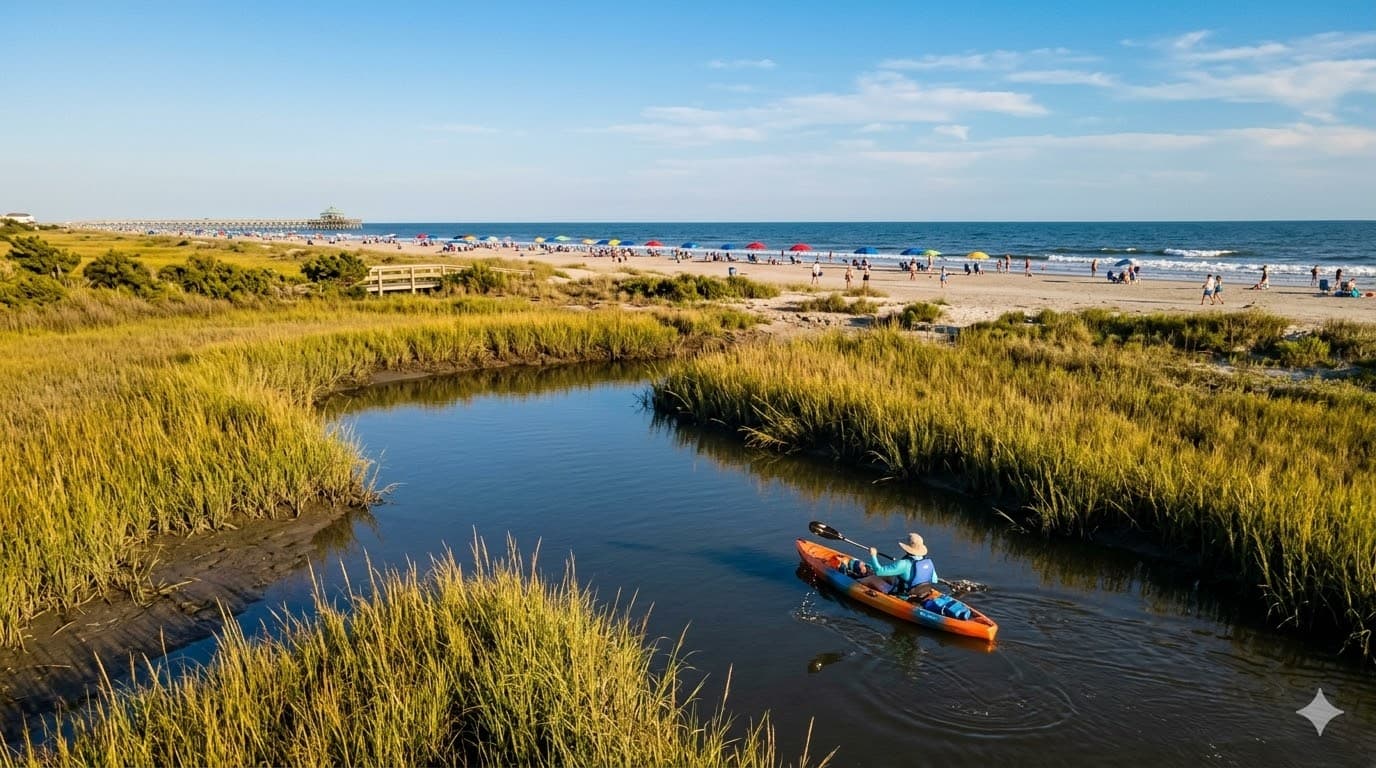
Folly Beach is six miles of barrier island with about 2,400 permanent residents, a fishing pier that stretches 1,045 feet over the Atlantic, the best surf break in South Carolina, and more ways to spend a day outside than most places three times its size. Here is everything worth doing — organized by what kind of day you want to have.
On the Water
Surfing the Washout is the reason many people come to Folly Beach in the first place. The Washout is a break on the western end of the island created by Hurricane Hugo in 1989, when the storm carved a channel through the dunes that permanently altered the sandbars. The result is a consistent, accessible beach break that works on a range of swells and accommodates everyone from beginners on longboards to experienced shortboarders. If you can only surf one spot in South Carolina, this is it.
The Folly Beach Pier area offers a different kind of wave — slower, more forgiving, better for longboarding. Surfing within 300 feet of the pier is prohibited, but the surrounding stretch is legal and often less crowded than the Washout. For everything you need before paddling out — breaks, conditions, rules, and what to bring — the Folly Beach surfing guide covers it all.
Kayaking and paddleboarding on the Folly River and the tidal creeks behind the island is a completely different experience from the ocean side. The river side of Folly Beach is calm, protected water surrounded by Spartina marsh grass — the iconic golden-green cordgrass of the South Carolina Lowcountry. Dolphin sightings are common on the river side, particularly in the early morning and late afternoon. Several outfitters on the island rent kayaks and paddleboards by the hour.
Dolphin watching is not a gimmick on Folly Beach. Atlantic bottlenose dolphins are genuinely common in these waters year-round, and the tidal creeks behind the island are a particularly good place to observe them feeding. The phenomenon of strand feeding — where dolphins chase fish onto the bank and briefly beach themselves to catch them — occurs in the Lowcountry and has been documented in the waters around Folly Island.
Fishing from the Edwin S. Taylor Fishing Pier is one of the most accessible fishing experiences on the East Coast. The pier extends 1,045 feet over the Atlantic and has covered areas, fish cleaning stations, and rod rentals. Species caught from the pier include flounder, red drum, black drum, sheepshead, and Spanish mackerel depending on season. A daily fishing pass is required.
Charter fishing boats operate out of the Folly Beach area for offshore and nearshore trips — targeting king mackerel, mahi-mahi, and grouper offshore, and inshore redfish and trout in the creeks.
On the Beach
Folly Beach County Park on the western tip of the island is the most underrated spot on Folly Beach. It's a Charleston County Park, which means it's managed separately from the city beach, has its own parking (with a fee), and offers amenities including beach chair and umbrella rentals, restrooms, and a calmer atmosphere than the main beach access near Center Street. The park sits at the confluence of the Atlantic Ocean and the Folly River, giving it a distinctive geography — you can walk from ocean to river in minutes. Recommended for families and anyone who wants a quieter beach experience.
Shark tooth hunting at Lighthouse Inlet Heritage Preserve on the eastern end of the island is one of Folly Beach's more specific pleasures. The preserve — accessible by a trail from the end of East Ashley Avenue — puts you on a stretch of beach near the Morris Island Lighthouse where fossilized shark teeth wash up regularly. Megalodon teeth, extinct species that predate modern great whites, have been found here. The preserve requires some navigation to access properly and the terrain changes with tides, but it's worth the effort.
Beachcombing along the full stretch of Folly Beach turns up shells, sea glass, and the occasional interesting piece of debris. The beach on the west end near the county park tends to accumulate more material than the main beach due to current patterns.
Cultural and Historical
Morris Island Lighthouse is one of the most photographed landmarks in the Charleston area and it stands approximately 1,500 feet offshore from the eastern tip of Folly Beach — visible, but not walkable except at very low tide when the sandbars expose. The lighthouse dates to 1876 and was decommissioned in 1962. The land around it has eroded dramatically over the past century due to the construction of the Charleston harbor jetties, which altered the sediment flow along this section of coast. Boat tours from the Charleston area bring visitors close to the structure.
The Folly Beach Pier is worth visiting even if you don't fish. Walking out 1,045 feet over the Atlantic gives you a perspective on the island and the ocean that you can't get from the beach. On a clear day the view extends down the coastline in both directions. The pier was completely rebuilt in concrete in recent years, ensuring its longevity in a way the original wood structure could not guarantee.
Center Street is the commercial spine of Folly Beach and worth an hour of walking even if you're not hungry or thirsty. The street runs from the bridge entrance to the pier, and the blocks around it contain the full range of Folly Beach's character — surf shops, local restaurants, bars with live music, the kind of small-town commercial strip that has been largely eliminated elsewhere by chain retail. It looks lived-in because it is. For the full rundown of what's worth eating, the best restaurants on Folly Beach covers everything from breakfast through last call.
Events Worth Planning Around
Folly Gras is Folly Beach's Mardi Gras celebration, typically held in February. It's one of the biggest annual events on the island and draws significant crowds for parades, live music, and the general organized chaos that the event has developed over the years.
The Bill Murray Polar Plunge on New Year's Day is exactly what it sounds like — a mass swim into the Atlantic Ocean on January 1st. Bill Murray, who grew up in the Chicago area but has been associated with the Charleston area for years, has participated in Folly Beach's New Year's Day plunge. Whether he shows or not in any given year, the event draws a crowd.
Taste of Folly is an annual food and drink event typically held in January that showcases the island's restaurants and has become one of the better food events in the Charleston area.
The Fourth of July on Folly Beach is a significant event — the fireworks over the ocean draw crowds from across the Charleston area. If you're planning to be on the island for the Fourth, arrive early and plan your parking strategy in advance. The bridge backs up substantially.
Live music on Center Street is not a special event — it's a regular feature of the island. The Washout bar has live music most nights. Multiple venues on and near Center Street host local and regional acts throughout the year. Folly Beach has a genuine music culture that extends beyond cover bands, and finding a good show on a weekend night requires nothing more than walking Center Street.
Getting Around
Folly Beach is approximately six miles long and a quarter mile wide. You can bike the full length in about twenty minutes. Renting a bike from one of the shops on Center Street is the single best logistical decision you can make for a full day on the island — it eliminates parking as a variable, gives you the full geography of the place, and is genuinely enjoyable. If you're coming in from Charleston, the day trip guide covers timing, parking, and how to structure your hours on the island.
Golf carts are another common way to get around the island — rentals are available and the flat terrain makes them practical. Walking is fine for anything within a few blocks of Center Street.
The Folly River is navigable by kayak from multiple launch points and connects to the broader network of tidal creeks that characterize the Lowcountry coastal environment. If you have a boat or can rent one, the river side of Folly Beach and the surrounding marsh is worth exploring independently of the ocean side.
The Thing Most People Miss
The shoulder seasons. Most visitors experience Folly Beach in June, July, and August, when the island is at maximum capacity and the full tourist season is in effect. The same island in October, November, March, or April is quieter, cooler, and in many ways better. The water stays warm well into October. The crowds thin after Labor Day. The restaurants have room. The parking is manageable. Locals consider these the best months on the island, and they're right.