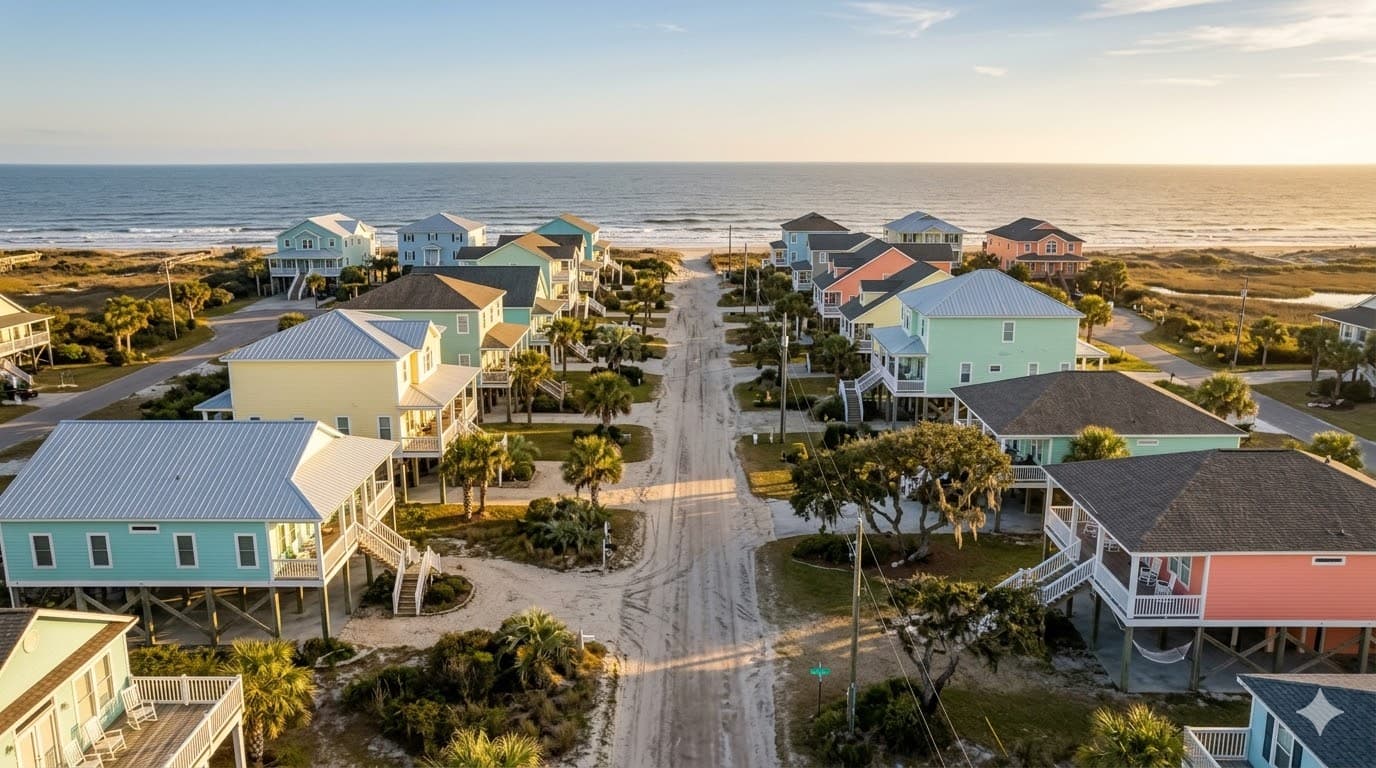
Folly Beach has a population of about 2,400 people. That number tells you something immediately: this is not a suburb. It is not a town. It is a small, specific community on a barrier island eleven miles south of Charleston, and living here is a genuine lifestyle decision — not just a real estate transaction.
So is it a good place to live? For the right person, yes. Unreservedly. For the wrong person, it will drive you out within a year. Here is the honest assessment.
What Makes Folly Beach Actually Good to Live In
The pace is real. Folly Beach does not pretend to be something it isn't. The island runs at a speed that prioritizes being outside, knowing your neighbors, and not having a commute that requires a highway. If you work remotely or work locally, you can build a daily life here that most people spend their whole careers fantasizing about.
The community is genuine. A town of 2,400 people develops real social fabric. You will know the person who runs the coffee shop. You will recognize the family at the other end of the beach. The Folly Beach City Council meetings are the kind of civic engagement that has actually disappeared from most American towns. People here care about this place specifically — not as an investment or a backdrop, but as home.
The beach access is unparalleled. Living on Folly Beach means the Atlantic Ocean is a five-minute walk from anywhere on the island. Not a drive. Not a weekend trip. A walk. That access, experienced daily rather than occasionally, changes how you live.
The surf culture is the real thing. Folly Beach is the best surf destination in South Carolina. If surfing is part of your life or you want it to be, living here puts you in the water on a Tuesday morning before work. The Washout, the pier break, the county park — these are your backyard.
Center Street is legitimately good. For a town of 2,400, the food and bar scene on Center Street punches well above its weight. Jack of Cups, Chico Feo, Lost Dog, The Washout — these are not just beach bars. They are places with personality that you will return to regularly, not begrudgingly.
What Nobody Tells You Before You Move
The tourist season is relentless. From Memorial Day through Labor Day, your island absorbs 20,000 people on a busy weekend. Parking becomes a sport. Your favorite restaurant has a two-hour wait. The bridge backs up on Sunday afternoons. You will either make peace with this as the cost of living somewhere people want to visit, or it will erode you.
Most permanent residents develop rhythms around the tourist season: early mornings before the crowds, weekday routines that sidestep the weekend chaos, and a genuine appreciation for October through April when the island returns to its actual self.
Everything costs more. Barrier island logistics add cost to everything. Groceries at Bert's Market are priced accordingly. Home insurance on a flood-zone barrier island is significant — budget for it. Maintenance costs for a home exposed to salt air and humidity year-round are higher than anywhere inland. The trade-off is real and worth understanding before you commit.
Flood risk is not theoretical. All of Folly Beach is in a FEMA flood zone. Understanding what's permitted on the beach — from dogs to alcohol to surfing zones — matters more as a resident than as a visitor, since these rules shape your daily routines. The island experiences beach erosion, storm surge during hurricane season, and periodic flooding on low-lying roads. Most residents have lived through at least one mandatory evacuation. The city has protocols and most of the island's houses are built elevated on pilings for exactly this reason — but if natural disaster risk is something you cannot psychologically manage, Folly Beach will be stressful in ways that have nothing to do with the community.
The housing market is expensive. Median home prices on Folly Beach have stabilized in the $1.1 to $1.3 million range. Before committing to a purchase, many people spend time renting first — the vacation rental guide covers the rental market and what different parts of the island actually feel like to stay in. The combination of limited island geography, the short-term rental market, and genuine demand from people who want to live here has compressed affordability significantly. Many people who love Folly Beach end up buying on James Island — close enough for the lifestyle, with meaningfully lower price points — and commuting to the beach rather than living on it.
The short-term rental cap matters. The city of Folly Beach caps investment short-term rental licenses at around 800. If you buy with the intention of renting your property when you're away, understand the regulatory framework before you close. Owner-occupied short-term rental licenses have different rules than investment licenses. This is a research-before-you-buy situation.
Who Thrives on Folly Beach
Remote workers who can design their own schedule. People who surf, fish, kayak, or simply want to be outside constantly — the range of activities on the island makes that easy year-round. Empty nesters who have traded suburban space for a specific quality of daily life. Artists and writers who moved here for the same reasons George Gershwin and Edward Hopper did a century ago — the light, the pace, the specific energy of a place at the edge of things.
Families with young children can and do make it work. The school situation requires planning — Folly Beach's children attend James Island schools, which means a daily commute off the island. For some families, that's fine. For others, it's a dealbreaker.
Who Doesn't Stay
People who need urban amenities within walking distance. People who underestimate the tourist season. People who bought as an investment without intending to actually live here and find the carrying costs don't work. People who need a large house with a yard — the island's density and price point work against that combination.
The Honest Bottom Line
Folly Beach is an exceptional place to live for a specific kind of person who wants a specific kind of life. It is not a compromise. It is a choice. The people who live here permanently have almost universally made a deliberate decision to prioritize place over convenience, community over amenity, and daily access to the ocean over square footage.
If that trade sounds appealing rather than alarming, Folly Beach is probably worth looking at seriously. If any part of that trade sounds like deprivation, save yourself the time.
The island will tell you quickly which category you're in.