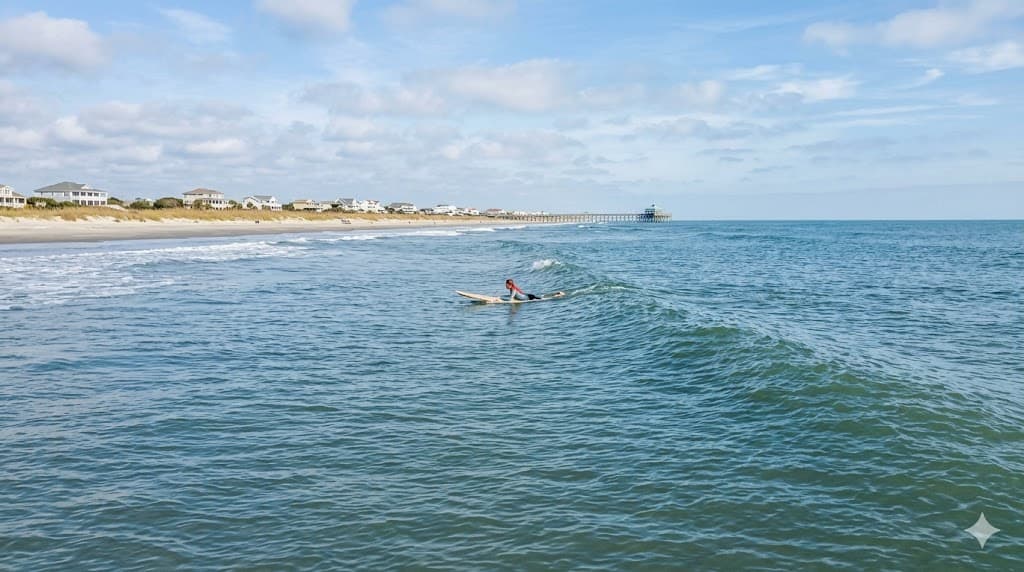
Charleston, South Carolina sits eleven miles from the best surf in the state. Most people who live in or visit Charleston don't know this. The city's reputation as a historic, culinary, and cultural destination overshadows its proximity to a legitimate surf scene that has produced competitive surfers and drawn wave riders from across the Southeast for decades.
Here's the complete guide to surfing near Charleston.
Why the Charleston Area Has Surf
South Carolina's coastline runs roughly northeast to southwest. This orientation limits direct swell exposure for most of the state compared to more north-facing coastlines in North Carolina or the Outer Banks. But the Charleston area benefits from a few geographic factors that concentrate what swell does arrive.
The Charleston Harbor jetties, built in the late 1800s to maintain the shipping channel, altered sediment transport along the coast in ways that created and continue to maintain productive sandbars at Folly Beach. The orientation of Folly Island relative to the Atlantic catches northeast and east swells — the predominant swell directions for this region — more directly than surrounding beaches.
The result is a surf scene that's genuine and consistent by East Coast standards, even if it doesn't compare to the power and size available further north in North Carolina.
Folly Beach — The Center of the Scene
Folly Beach is the undisputed hub of surfing near Charleston. The island sits eleven miles south of downtown Charleston via Folly Road and has the most consistent, highest-quality surf in the region. Two breaks define the Folly Beach surf experience.
The Washout is the signature break — a beach break at the western end of the island created by Hurricane Hugo in 1989. The sandbars it formed produce a wave that handles northeast and east groundswell with a quality that makes it the most surfed break in South Carolina. See our complete Washout guide for everything about this break specifically.
The Folly Beach Pier area produces a slower, more forgiving wave suited to longboarding and developing surfers. The pier structure creates sandbar formations on both sides that provide defined peaks even on smaller days. Surfing within 300 feet of the pier is prohibited.
For the complete picture of surfing at Folly Beach including rules, equipment, and conditions, see our Folly Beach surfing guide.
Sullivan's Island
Sullivan's Island is seven miles from downtown Charleston — actually closer than Folly Beach — but the surf is typically smaller and less consistent. The beach faces a slightly different direction than Folly and catches less of the northeast swell that produces the best East Coast surf.
When it does work — usually on larger northeast swells or after storms — Sullivan's Island has uncrowded waves and a much quieter atmosphere than Folly Beach. For experienced surfers who want an uncrowded session and are willing to accept less consistent conditions, Sullivan's Island is worth checking when Folly is blown out or crowded.
Isle of Palms
Isle of Palms, about 18 miles from downtown Charleston, has surf but not the sandbar quality that Folly Beach produces. It's a longer drive for generally inferior waves. Most Charleston-area surfers drive past Isle of Palms to get to Folly Beach.
The exception is when specific swell directions and sandbar combinations align at Isle of Palms — these moments happen, locals know about them, and the crowd is usually manageable because the spot doesn't have Folly's reputation.
When to Surf Near Charleston
Fall is the best season for surfing near Charleston by a significant margin. September through November brings the combination of warm water from summer, hurricane swell from the Atlantic storm track, and consistent northeast groundswell from early-season storms. The Washout and other Folly Beach breaks are at their best during this window.
A hurricane sitting several hundred miles offshore generating swell without direct landfall threat produces some of the best surf conditions of the year on this coast. Tracking the hurricane season in the Atlantic with an eye toward swell — not just the storms themselves — is part of how local surfers stay ahead of the best conditions.
Winter brings cold water but consistent swell. December through February requires a 4/3 wetsuit and sometimes a hood and booties, but the waves are often the best of the year and the crowds are minimal.
Summer is inconsistent for surf. Small, wind-driven waves are the norm. The beach is full of people and the surfing scene takes a back seat to swimming and general beach activity.
Spring brings improving water temperatures and occasional solid swells as late winter storms continue to generate energy. May offers some of the best combination of manageable water temperature and decent surf before summer flatness sets in.
Learning to Surf Near Charleston
Several surf schools operate on Folly Beach and offer lessons for all skill levels. For first-time surfers, a lesson is by far the most efficient path to actually catching waves — trying to figure it out alone wastes time and can develop bad habits.
The South Carolina coast, with its smaller and more forgiving waves compared to heavier surf regions, is a genuinely good place to learn. The Washout on a small day and the pier area on a moderate day produce the kind of waves that allow beginners to build the fundamental skills — paddling, popping up, basic balance and steering — without the punishment of more powerful surf.
The Local Surf Culture
The surfing culture around Charleston has existed for decades. The Folly Beach surf community is genuine — people who have been surfing these breaks for years and have real knowledge of the sandbars, the conditions, and the history of the spot.
The Wahine Classic, which ran from 2006 to 2017, was a direct expression of that culture — a women's surf competition that used Folly Beach's legitimate waves as its venue and drew competitors from across the East Coast because the surf was good enough to justify it.
Getting in the water at the Washout as a visitor means entering a community space. Standard surf etiquette — right of way to the surfer closest to the peak, no dropping in, patience in the lineup — is the price of admission anywhere and especially important at a spot with a strong local presence.