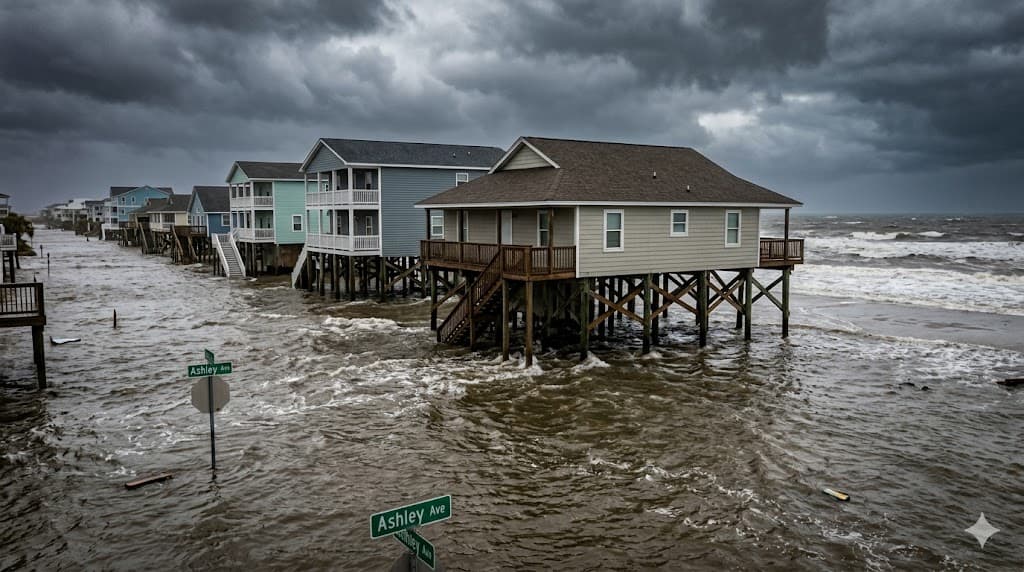
All of Folly Beach is in a FEMA special flood hazard area. This is not a marginal designation — it is a fundamental characteristic of barrier island living that affects insurance requirements, mortgage costs, building standards, and the practical reality of owning property here. Understanding it is not optional for anyone considering buying on the island.
Here's what the flood zone designation actually means and how to navigate it as a buyer or current homeowner.
What the Flood Zone Designation Means
FEMA's flood zone designations indicate the statistical likelihood of flooding in a given area. Folly Beach falls within Zone AE or Zone VE in most areas — the designations used for high-risk flood areas with a 1% annual chance of flooding (the so-called 100-year flood) or, in the case of Zone VE, coastal areas with additional wave action hazard.
Zone AE: High-risk flood area. Base flood elevations have been established by FEMA. Properties in Zone AE with federally-backed mortgages are required to carry flood insurance.
Zone VE: Coastal high hazard area. The highest-risk designation. Properties in Zone VE face flood risk plus wave action and velocity forces during storms. Building standards are more stringent and insurance costs are highest in these zones.
The specific zone designation for any individual parcel on Folly Beach can be found using FEMA's Flood Map Service Center online, using the property's address.
Flood Insurance — Requirements and Costs
If you have a federally-backed mortgage (which includes loans backed by Fannie Mae, Freddie Mac, FHA, VA, and USDA), flood insurance is required if the property is in a Special Flood Hazard Area. There is no exemption for Folly Beach properties.
If you pay cash or have a conventional non-federal mortgage, flood insurance is not legally required — but it is strongly advisable and many lenders require it regardless.
Cost: Flood insurance premiums on Folly Beach are significant. The National Flood Insurance Program (NFIP) is the primary source of flood coverage for most residential properties, though private flood insurance has grown as an alternative in recent years.
NFIP premiums have been recalculated under FEMA's Risk Rating 2.0 system, which moved away from flat rate tables toward risk-based pricing that reflects the specific flood risk of individual properties. Under Risk Rating 2.0, properties with higher elevation certificates — those with finished floor elevations well above the base flood elevation — generally have lower premiums. Properties at or below base flood elevation can face premiums in the thousands of dollars annually.
Get the current flood insurance costs before closing. Ask the seller for their current flood insurance declaration page. This gives you the current coverage, premium, and policy details. Flood insurance costs for the same property can vary significantly depending on coverage amounts, the insurer, and how the policy was originally written.
Elevation Certificates
An elevation certificate documents the elevation of a structure relative to the base flood elevation (BFE) established by FEMA for that flood zone. The higher a building's lowest floor is above the BFE, the lower the statistical flood risk — and generally, the lower the flood insurance premium.
Why elevation certificates matter:
- They're used to determine flood insurance rates
- They're required for properties in high-risk flood zones when purchasing or renewing NFIP coverage
- They document the compliance of construction with flood zone requirements
When buying on Folly Beach: Request the elevation certificate for any property you're considering. If one doesn't exist or is outdated, you can have a licensed surveyor prepare a new one. The cost is typically a few hundred dollars and the information can significantly affect your insurance cost calculation.
How Folly Beach Properties Are Built
Folly Beach's building codes, consistent with FEMA requirements for coastal flood zones, require new construction and substantially renovated structures to have their lowest floor elevated above the base flood elevation. This is why most Folly Beach houses are built on stilts or elevated foundations — the ground floor is typically open (used for parking and storage) with the living space elevated above the BFE.
Older homes on the island that predate modern flood zone regulations may have ground-level living space that doesn't meet current elevation requirements. These structures are grandfathered under the existing regulations but face higher flood insurance costs and may have limitations on renovation.
When evaluating a Folly Beach property, the elevation of the lowest finished floor relative to the BFE is a key data point — not just for insurance costs but for practical flood risk during storms.
The Reality of Storm Risk
Folly Beach's flood zone status is not theoretical. The island has experienced significant storm events and flooding. Hurricane Hugo in 1989 — which also created the Washout surf break — produced storm surge that inundated the island and caused extensive property damage. Subsequent hurricanes and nor'easters have caused varying degrees of flooding depending on intensity and track.
Mandatory evacuation orders for Folly Beach are issued when storm systems threaten sufficient storm surge. Compliance with mandatory evacuation orders is not optional. Long-term residents have evacuation plans and know the drill. New residents need to develop the same.
The question is not whether Folly Beach will experience significant flooding again — it will. The question is how often, how severe, and how well the specific property you own handles it. That's the calculation that flood zone designation, elevation certificates, and insurance are designed to quantify.
Due Diligence Checklist for Buyers
Before closing on any Folly Beach property:
Obtain and review the current elevation certificate. Verify the FEMA flood zone designation for the specific parcel. Get flood insurance quotes from multiple sources — NFIP and private markets. Review the seller's current flood insurance policy. Ask about the property's history of flooding or storm damage. Understand the current building's elevation relative to BFE. If the property has ever had a flood insurance claim, the claims history is available through FEMA and affects insurability.
For more on the Folly Beach real estate market, see our guide to living on Folly Beach, the short-term rental rules guide, and our moving to Folly Beach guide for the complete picture.