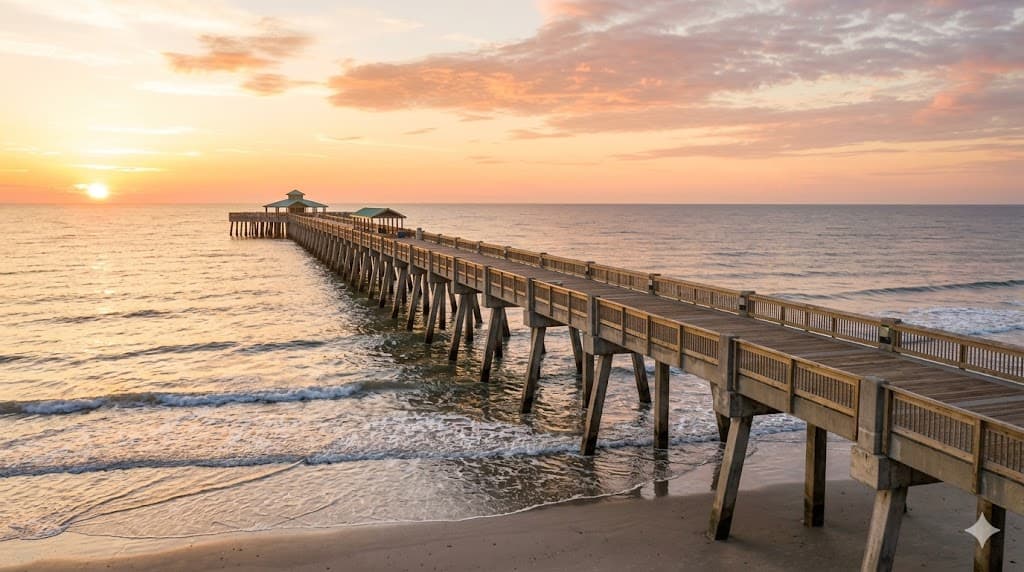
The Edwin S. Taylor Fishing Pier is one of the most recognized structures on the South Carolina coast. It extends 1,045 feet over the Atlantic Ocean from the eastern end of Center Street, visible from the beach in both directions and a landmark that defines the geography of Folly Beach. It's been rebuilt in concrete to last 65 years. It's genuinely worth visiting even if you never pick up a fishing rod.
Here's everything you need to know about the pier.
The Pier's History
A fishing pier has stood near this location on Folly Beach for most of the island's modern history. The original structures were wood and suffered various degrees of damage from hurricanes and storms over the decades. The current pier — built to replace its predecessor — was constructed in concrete and steel to a significantly higher standard than the wooden piers it replaced.
The rebuild created a wider platform than previous versions, added covered areas for fishing and shelter, and extended the useful lifespan of the structure to an estimated 65 years. It reopened with dedicated fishing areas, seating, and the infrastructure needed for a pier that serves both serious anglers and casual visitors.
The pier is named for Edwin S. Taylor, a Folly Beach mayor and longtime civic figure whose contribution to the island community earned the naming honor.
Walking the Pier — No Fishing Required
The pier is open to non-fishing visitors for a walk. There's no charge to walk out, though fishing requires a daily pass purchase. For visitors who want to experience the pier without fishing gear, the walk itself is worth doing.
Walking 1,045 feet over the Atlantic Ocean gives you a perspective on the beach, the surf zone, and the coastline that you can't replicate from the sand. Looking back toward the island from the end of the pier shows you Folly Beach from the water — the low profile of the barrier island, the beach, and the buildings on Center Street reduced to their appropriate scale against the Atlantic. Looking the other direction is open ocean to the horizon.
The elevated platform also gives you a superior view into the surf zone. Dolphins frequently work the water adjacent to the pier, and the elevated angle makes spotting them significantly easier than from beach level. Early morning on the pier is one of the more reliably productive wildlife viewing experiences accessible from Folly Beach.
Fishing the Pier
The pier produces a solid variety of species throughout the year. What you catch depends heavily on season.
Spring and Fall: Spanish mackerel and bluefish are the primary targets during their migration runs. Both species move through the near-shore waters in concentrated schools during spring and fall, and pier fishing during a mackerel run can be some of the fastest action of the year. Spoons and jigs fished quickly near the surface are the standard presentation.
Summer: Sheepshead, red drum, and black drum hold near the pier structure year-round, with peak activity in summer. These structure-oriented species congregate around the pilings where barnacles, mussels, and crabs provide abundant food. Fishing with fiddler crabs or shrimp tight to the structure is the most effective approach.
Flounder hold on the sandy bottom adjacent to the pier. Pompano, known locally as a particularly good eating fish, move through in summer and fall.
Year-round: Whiting, spot, and croaker are caught consistently throughout the year on bottom rigs with shrimp or bloodworms. These smaller species provide consistent action even when the more prized species aren't running.
Occasional larger species: King mackerel, cobia, and tarpon are caught from the pier during their seasonal presence in nearshore waters. These are not daily catches but happen regularly enough to be worth being prepared for.
Pier Fishing Regulations
A fishing license is required for anglers 16 and older who are not South Carolina residents. South Carolina residents also need a license except for those under 16. A daily pier fishing pass is available for purchase at the pier — this covers both the access and the fishing license requirement for the day.
Specific regulations apply to size and bag limits for various species. The pier staff can provide current regulations. Regulations change annually, so checking current rules before fishing is worth doing rather than assuming last year's limits still apply.
Fishing Gear and Equipment
Rod rentals are typically available at the pier for visitors who didn't bring their own equipment. Tackle and bait are sold on site, which makes the pier accessible for spontaneous fishing without preparation. If you're planning a dedicated fishing session, bringing your own equipment is more cost-effective than renting.
The pier is set up for bottom fishing and light tackle. Heavy surf rods aren't necessary. A medium rod in the 7-8 foot range with 15-20 pound test line handles the majority of what's caught here.
Pier Rules
Surfing is prohibited within 300 feet of the pier at all times — a year-round rule. Swimming from the pier is not permitted. The pier has its own designated areas for different types of fishing and maintains rules about cast direction to prevent tangled lines. First-time pier visitors should note where the fishing areas are marked and follow the flow of activity.
No glass containers are allowed on the pier.
Getting There
The pier is at the end of East Arctic Avenue at its intersection with Center Street — the eastern terminus of the main commercial strip. It's walking distance from most parking areas near Center Street. The parking area adjacent to the pier fills earliest on summer weekends.
For more on things to do on and around the water at Folly Beach, see our complete things to do guide and the kayak rentals guide for water-based activities on the river side.