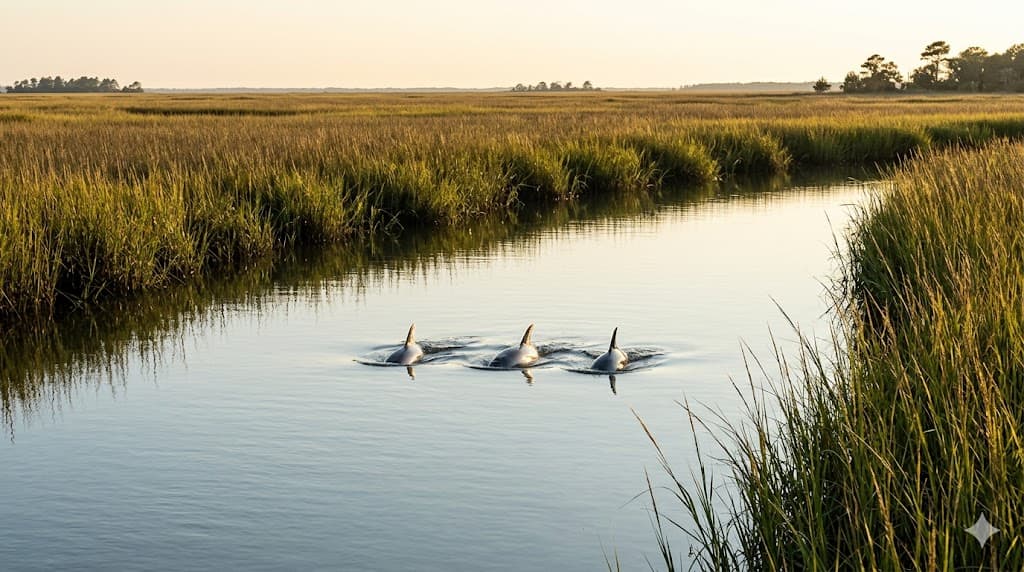
Atlantic bottlenose dolphins live in the waters around Folly Beach year-round. They're not seasonal visitors or rare sightings — they're residents of the Folly River, the tidal creeks, and the nearshore ocean waters that surround the island. Seeing them on a visit to Folly Beach is genuinely likely if you know where to look and when.
Here's everything you need to know about dolphin watching and dolphin tours near Folly Beach.
Free Dolphin Watching — No Tour Required
Before spending money on a guided tour, know that dolphins are regularly visible from the beach, the pier, and the river side of the island without any boat or guide required.
From the fishing pier: The Edwin S. Taylor Fishing Pier extends 1,045 feet over the Atlantic. From the elevated platform, you can look down into the surf zone and the nearshore water. Dolphins frequently work the surf zone adjacent to the beach, chasing fish pushed toward shore by the waves. The elevated angle from the pier gives you a view you can't get from beach level.
From the beach itself: Dolphins surfing waves in the surf zone are not uncommon at Folly Beach, particularly in the early morning and late afternoon when they're most actively feeding. Scanning the water from the beach during these windows is worth doing before committing to a tour.
From the river side: The Folly River and the tidal creeks are where you're most likely to see dolphins in calm, close conditions. Drive or walk to the river side of the island — any street running north from Center Street — and watch the water near the marsh grass edges. Dolphins feeding in the creeks come very close to the bank at times.
Strand Feeding — A Unique Behavior
The South Carolina Lowcountry is one of the few places in the world where you can observe dolphin strand feeding — a behavior where dolphins cooperatively chase fish onto mudflats and briefly beach themselves to catch them. It has been documented in the tidal creeks and marsh areas around Folly Beach and the broader Charleston area.
Strand feeding is not guaranteed to be observed on any given visit, but it occurs regularly enough that local wildlife photographers and guides specifically watch for it. It requires the right tidal conditions — usually falling tide exposing the mudflats — and cooperative dolphins working together.
If you see dolphins near a shallow grassy bank at low tide and they seem to be moving aggressively toward the shore, watch closely. The behavior is fast and dramatic — dolphins surge onto the bank, grab fish, and slide back into the water in a matter of seconds.
Guided Boat Tours
Several operators run dolphin watching and eco-tours from the Charleston area that include the waters around Folly Beach. The advantage of a guided tour is access to more water than you can cover on foot or by kayak, local knowledge about where dolphins are likely to be on a given day, and a captain who understands dolphin behavior and knows how to position the boat appropriately.
What to look for in a tour operator: Responsible operators maintain distance from dolphins and do not chase or approach them aggressively. Federal law under the Marine Mammal Protection Act prohibits harassing dolphins. A good operator will position the boat to let dolphins approach on their own terms rather than pursuing them.
Tour types vary — some focus specifically on dolphin watching, others are broader eco-tours covering birds, marsh wildlife, and the general Lowcountry ecosystem with dolphins as a highlight rather than the exclusive focus.
Booking: Tours operate out of various marinas in the Charleston area. Searching for dolphin tours or eco-tours in the Charleston or Folly Beach area will surface current operators. Booking in advance is recommended in summer when tours fill up.
Kayak Dolphin Tours
Guided kayak tours that specifically focus on dolphin habitat in the tidal creeks combine kayaking with wildlife watching in a format that puts you at water level rather than on a boat. The intimate scale of a kayak in the marsh — quiet, low to the water — is a genuinely different experience from a motorized boat tour.
Several outfitters in the area offer guided kayak tours specifically targeting the dolphin-rich creek systems around Folly Beach. See our kayak rentals guide for more on kayaking in this area.
When to See Dolphins
Year-round: Bottlenose dolphins are resident in these waters every month of the year. There is no season when they are absent.
Best times of day: Early morning and late afternoon are peak feeding times. The light is also better for photography during these windows.
Tidal influence: Falling tide concentrates fish on exposed mudflats and in the shallowing creeks, which concentrates dolphin feeding activity. Incoming tide distributes activity more broadly. Both can produce sightings — falling tide is simply more predictable for seeing feeding behavior.
Water clarity: Calm, clear days make dolphins easier to spot from the beach and pier. Choppy, wind-driven days make surface spotting harder — dolphins are still there but the visual noise of the water surface obscures them.
Responsible Dolphin Watching
The dolphins around Folly Beach are wild animals and should be treated accordingly. Federal law prohibits feeding, touching, or harassing marine mammals. From a practical standpoint:
- Maintain distance — don't wade into the water toward dolphins or attempt to touch them
- Don't feed them — this disrupts natural behavior and can cause harm
- Watch quietly — loud noises and sudden movements cause dolphins to move away
- Keep dogs back from areas where dolphins are actively feeding
The dolphins in these waters are habituated to some degree to human presence near the shore, but they are not tame and the appropriate relationship is observation from a respectful distance.
For more on wildlife and activities around Folly Beach, see our complete things to do guide and the Folly Beach County Park guide for more wildlife viewing locations.